
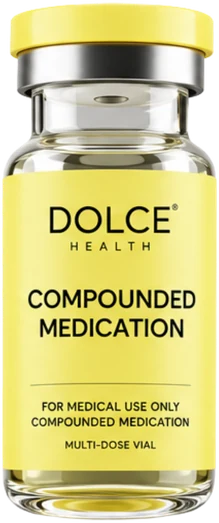
Start Sermorelin Today, With A Provider Behind Every Step
Sermorelin
A GHRH analog that asks your own pituitary to release growth hormone on its natural nightly schedule — rather than replacing the hormone from outside.

How Sermorelin works
Sermorelin works one step upstream of growth hormone itself. It speaks to the gland that produces it, so your body keeps deciding how much to release and when.
- Docks at the GHRH receptorAs a GRF 1-29 analog, Sermorelin binds the growth-hormone-releasing-hormone receptors on the anterior pituitary — the same docking site your own GHRH uses to initiate a release signal.
- Prompts a pulse, not a floodInstead of raising a steady background level, it cues the pituitary to secrete growth hormone in a discrete pulse, ideally timed to the slow-wave sleep window when the largest natural surge already occurs.
- Feedback stays in chargeBecause the hypothalamus and pituitary still govern the loop, somatostatin and rising IGF-1 can taper the response — so release reinforces your own regulation rather than overriding it.
GH Support
Sermorelin is a compounded peptide built from the first 29 amino acids of growth-hormone-releasing hormone (GRF 1-29) — the shortest fragment that still carries the full signaling message. Rather than introducing growth hormone from outside the body, it prompts the pituitary to make and release its own, so the hypothalamic feedback loops that keep levels in range stay in charge. Because that signal normally crests during deep sleep, Sermorelin is most often used to support restorative rest, recovery, and the sense of vitality that can soften with age.
You Have Questions,
We Have Answers
Growth-hormone therapy supplies the hormone itself. Sermorelin instead signals your pituitary to release its own, so your body's feedback loops still govern the amount — a more physiologic approach that keeps release within your own regulated range.
Your largest natural growth-hormone pulse occurs during deep sleep. Dosing at bedtime lets Sermorelin's brief GRF 1-29 signal reinforce that existing surge rather than work against your rhythm.